Healthcare As We Once Knew it is Dead

The healthcare landscape has changed over the last 20-25 years.  Primary care physicians used to manage overall patient care, coordinating with specialists for care that was outside their training and expertise.  Now, it seems that the primary care physician sees the patient a few times a year and might even request labs or perform a well-exam.  These exams have been greatly watered down over the years due to government red tape, ill advice from the U.S Preventive Services Task Force and declining reimbursement.  What used to be a true 40-minute history and physical has become a 10-to-15-minute checklist of things that the patient’s insurance company will likely reimburse the physician for providing.  The list of what won’t be done is longer than the list of things that will be done.  For specialty care, I notice that patients are increasingly arranging for care on their own, which often leaves the primary care physician out of the loop.

Primary care physicians used to have a trusted network of specialists to whom they could refer for evaluation and management of concerns outside of the primary care physician’s scope of practice.  A simple phone call once served as an introductory transfer of the patient from primary to specialty care.  Progress notes and polite thank you notes followed upon returning the patient to the primary care setting.  Today, insurance regulations and paperwork have become the primary focus, while the actual diagnosis and treatment of the condition(s) have become a distant secondary focus.  Medicare starts something and commercial insurers follow their lead, whether the policy is beneficial or harmful to their beneficiaries.

Referrals can be difficult to obtain, even for large academic medical centers.  In certain instances, the return of the patient to the primary care setting is delayed or halted altogether, with the specialist’s employer or accountable care organization assuming the role of the primary care physician.  Communication between offices has become something of a nightmare due to absent consultation notes in the patient’s chart.  In years past, referrals could be arranged quickly and easily.  The tides have changed over the last 20-25 years, with referrals becoming increasingly more difficult to obtain.  Due to insurance participation/non-participation, arranging referrals may take quite a while, and the patient’s condition might have worsened during the waiting period.

It is the author’s belief that the healthcare system is still recovering from the COVID-19 pandemic.  Preventive care was delayed to re-focus on the medically complex.  Patients who were not taking an active role in their care are now of higher acuity and require more resources to return to a more optimal state of functioning.  Referrals to specialists in large healthcare systems are still being impacted to due continued care for those medically complex patients who never fully recovered during the pandemic.

Referrals can be hard to come by, even in large cities with more than one major healthcare system.  Timeframes to obtain referrals varied for the author: 2 weeks for urology; 2 months for otolaryngology; 4-6 months for pulmonary evaluation after 1 round of COVID-19 and three rounds of pneumonia; 9-12 months for cardiology; and 24-36 months for a routine colonoscopy with gastroenterology.  For three of the above referral requests, the author was told there just weren’t enough good providers in San Antonio to see all the patients.  That waters down the prospects of finding a great provider to treat one’s medical conditions.

Is this the best we can do?  Is the status quo good enough?  While I share the same sentiment as my cardiologist and pulmonologist, “Healthcare as we once knew it is dead,” I say that we can do better, and the status quo isn’t something we should brag about.  While I’m grateful for the providers on my care team, I am disappointed that the healthcare system has changed for the worse.  I see patients being treated like numbers rather than human beings, band-aids being applied until the next care episode arrives, less emphasis on preventive care and fewer people taking part in their own care plans.  Will healthcare return to the glory days of 20-25 years ago?  Probably not.  However, I believe that if enough patients and providers start protesting the state of the current system, we could return to a better state within the next 5-7 years.

By Scott J. Grandjean, LFACHE


Getting Started with Zero Trust

By Eric Berard, MIS, CPHIMS

In an era of increasing cyber threats, the traditional approach of securing a network perimeter is no longer sufficient. Enter Zero Trust, a security framework that operates on the principle of “never trust, always verify.” This approach assumes that threats exist both inside and outside the network, and therefore, no user or device is inherently trusted.

Core Tenets of Zero Trust

  1. Verify Explicitly: Continuously validate the identity of users, devices, and applications using multiple factors such as authentication, device health checks, and role-based access controls.
  2. Least Privilege Access: Users and devices should have the minimum level of access necessary to perform their tasks. This limits the potential impact of a compromised account or system.
  3. Assume Breach: Zero Trust assumes that breaches are inevitable. By focusing on segmentation, continuous monitoring, and data encryption, it minimizes the damage caused by breaches and prevents lateral movement across the network.
  4. Micro-Segmentation: Divide your network into small segments with individual access controls to contain breaches and prevent unauthorized access to sensitive areas.
  5. Continuous Monitoring and Analytics: Track user behavior and network activity in real time to detect anomalies and respond to threats promptly.

How to Get Started with Zero Trust

Adopting Zero Trust is a strategic shift that requires a phased approach:

  1. Understand Your Assets: Identify critical data, applications, and systems. Conduct a risk assessment to pinpoint potential vulnerabilities.
  2. Establish Identity Controls: Implement multi-factor authentication (MFA), single sign-on (SSO), and identity management solutions to secure access.
  3. Segment the Network: Use micro-segmentation to isolate workloads, applications, and devices. Apply granular policies to control data flow.
  4. Monitor and Analyze: Deploy tools for continuous monitoring, such as Security Information and Event Management (SIEM) systems, to track user and network behavior.
  5. Implement Access Policies: Use tools like zero-trust network access (ZTNA) and conditional access policies to enforce least privilege.
  6. Educate Your Team: Ensure your organization understands the principles of Zero Trust. Regular training and communication are key to its success.

The Path Forward

Zero Trust is not a one-size-fits-all solution; it’s an ongoing journey that adapts to your organization’s needs. By starting small—such as implementing MFA or segmenting sensitive systems—and scaling up, you can build a robust security posture that protects against evolving threats.

Embracing Zero Trust is not just about technology; it’s about adopting a proactive security mindset to safeguard your organization’s future.

Vested Business Brokers

My goal for HLSA is to learn what our attendees seek to improve their business or to acquire their next position. As a co-founder of HLSA we have put together a dedicated board that will provide the guidance and networking required to help you reach your goals. As a Business Broker I utilize the Vested Business Broker platform. Vested is the largest, non-franchised Business Brokerage in the Country. We have over 125 Brokers Nationally and do business in 35 States. Our top priority is for the complete confidentiality of our sellers as we assist them in listing and then finding qualified buyers for their respective businesses. Our procedures are set up to incrementally qualify buyers for acquisitions of businesses we list. Those procedures are unique but will provide any buyer with full
disclosure of all aspects of the business they are interested in. Our processes must be followed by contract with our Sellers. These processes have been honed over 25 years and over 3500 businesses sold. They work well for both our sellers and our buyers. These procedures are the main reason our sellers list with Vested Business Brokers. I make a living by helping people buy and sell privately owned, profitable businesses. Building my practice takes networking. That networking is how HLSA operates and why it was founded. I would like to partner with anyone who may seek to acquire or sell a profitable business. We have a generous referral program to solidify any partnerships.

Vested Referral Program– Referrals are a main source of growing my brokerage practice. I would love to have more listings across the country, regionally and locally, so if you know of anyone looking to sell or buy a privately owned, profitable business please consider referring them to me. See our referral program info below. Thanks and all the best! I would like to introduce you to our Vested Referral Program. Simply refer the name, address and contact information of the seller of a privately owned, profitable business or an interested buyer and you will be eligible to receive a percentage of our commission upon closing of a sale with that referral. This is no small amount depending upon the business purchased and the final sales price. Please see the link below with more information!

Link to Vested Referral Program: https://www.vestedbb.com/referral.html

Vested Business Brokers Website: https://www.vestedbb.com/

Thank you for your consideration!
Gary J. Meyn, LFACHE
210-912-0120
gmeyn@vestedbb.com


Healthcare Leaders Enters its 11th Year of Forging New Connections

Healthcare Leaders celebrated its 10th anniversary last year. Back in 2014, we were a small handful of acquaintances, some of whom had experienced position eliminations, were transitioning out of the military, or just plain looking for new and better opportunities.  We were meeting twice a month, early in the morning, at a coffee shop on 281 trying to help each other make connections and identify opportunities. Over the course of a few months, we developed a little email following of two or three dozen people, many of whom had never been to our meetings. “We’d love to attend,” they would tell us, “but can’t make mornings, can you do something in the evening?” 

At that point, we started doing an evening mixer the second Thursday (so as not to coincide with our friends at San Antonio IT Networking Group on the first Thursday) of each month. We’ve been hosting our networking events ever since. Like everyone else, we had an unwelcome hiatus forced on us by COVID. We even had a newly launched and ultimately short-lived Houston chapter that was closed after only two meetings due to the lockdown. But, as things returned to normal, we concentrated on rebuilding our San Antonio group. After about a year, we were back to where we had been and beginning to grow even larger.

Over the years, we’ve had a lot of great sponsors, venues and speakers for our special events. As most of our regular attendees know, for many years we were at the Sustenio Restaurant at the Eilan Hotel. They were great and gracious hosts, but, sadly, we outgrew the space they could offer and set off exploring other locales. Our very first special event sponsor was the South Texas Spine & Surgical Hospital for a luncheon hosted by the Bexar County Medical Society.

Although we began as a small group helping each other with job leads, over the years we have probably been more prolific in connecting people with new clients and new business. However, helping people connect with someone who can point them to a new job remains near and dear to our hearts and we are delighted if we can offer help in what can be a very trying and stressful time.  We are dedicated to fostering business connections, and our goal is to do this in an atmosphere of community and familial support.

If you haven’t already done so, please join us sometime. Come and connect.

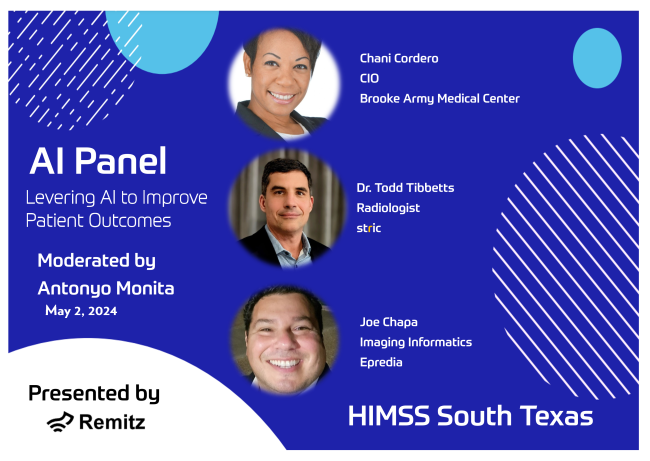
HIMSS South Texas Chapter: Summit on Leveraging AI in Healthcare

For our HLSA friends in the South Texas Chapter of HIMSS, there will be an AI Summit on Leveraging AI in Healthcare at the Chapman Center of the Trinity University Campus on May 2, 2024. Discover how AI is being used to enhance patient outcomes, streamline processes, and improve overall healthcare delivery. Network with professionals and gain insights into the future of healthcare technology. Don’t miss this opportunity to learn about the latest advancements in AI and its impact on patient care! See the agenda and times below. Seating is limited and going fast so register now!

AI Summit: Leveraging AI for Healthcare

Date: May 2, 2024

Location: Trinity University; Chapman Hall & Great Hall

Agenda:

3:00pm- 3:30pm- Check-In

3:30pm-4:30pm – AI Panel Discussion

4:30pm-5:00pm – Q&A

5:00pm-7:00pm – Networking Social

Join us at the AI Summit where experts in the field will discuss how Artificial Intelligence (AI) is revolutionizing healthcare.


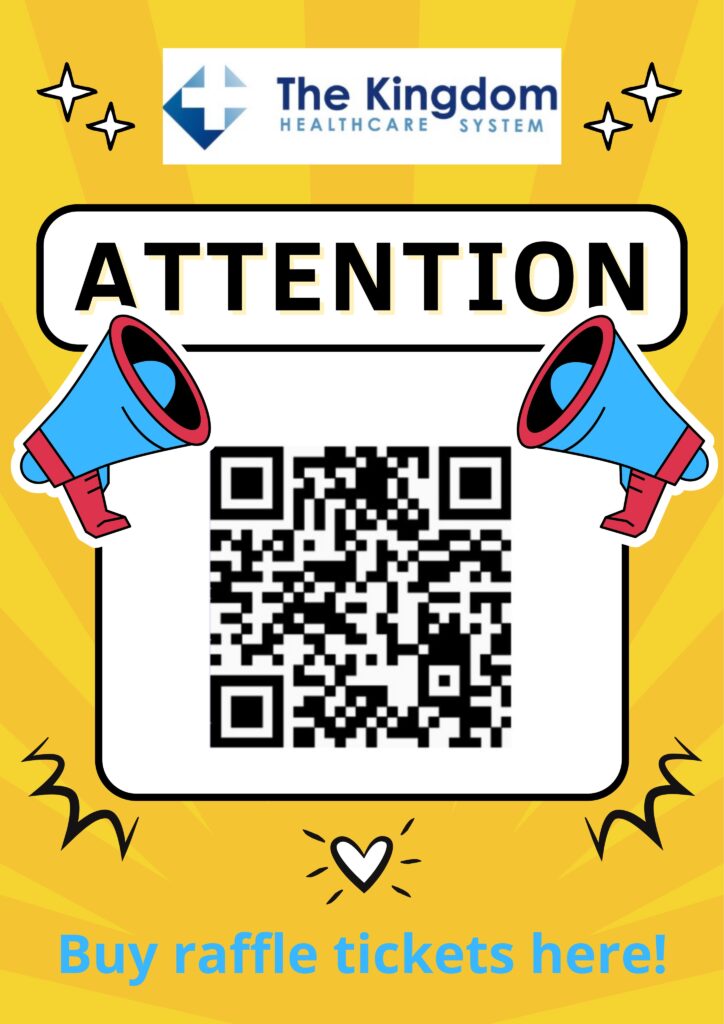
Purchase a chance to win a great ATV and support The Kingdom Healthcare System!

Many of our HLSA regulars know Dr. Hussein Musa and Dr. Adetoun Musa, the husband-and-wife physician founders of The Kingdom Healthcare System, a wonderful San Antonio based non-profit that, in their own words, “Provides access to free and affordable primary healthcare to medically underserved communities as a physical example of God’s love for all people.” Kingdom’s scope and outreach has been growing rapidly since we met the Musa’s two years ago, including the recent addition to their team of Hondo Esparza as Director of Operations. Together, they are in the midst of a new fundraising campaign featuring a chance at a really nice ATV for only $15! The drawing will be held Wednesday, May 22, 2024, so there is still plenty of time to purchase your ticket by scanning the QR code below. Please help the Kingdom team help the medically underserved in our community by supporting this worthy cause!


Simon Sinek: How Great Leaders Inspire Action

Take some time while you’re here to watch this inspiring TED Talk by Simon Sinek, on how great leaders inspire action. In Simon’s words, “People don’t but what you do, they buy what you believe. And what you do simply proves what you believe.” While the video dates to 2009, some life lessons bear repetition, and Simon is a compelling speaker. Enjoy.